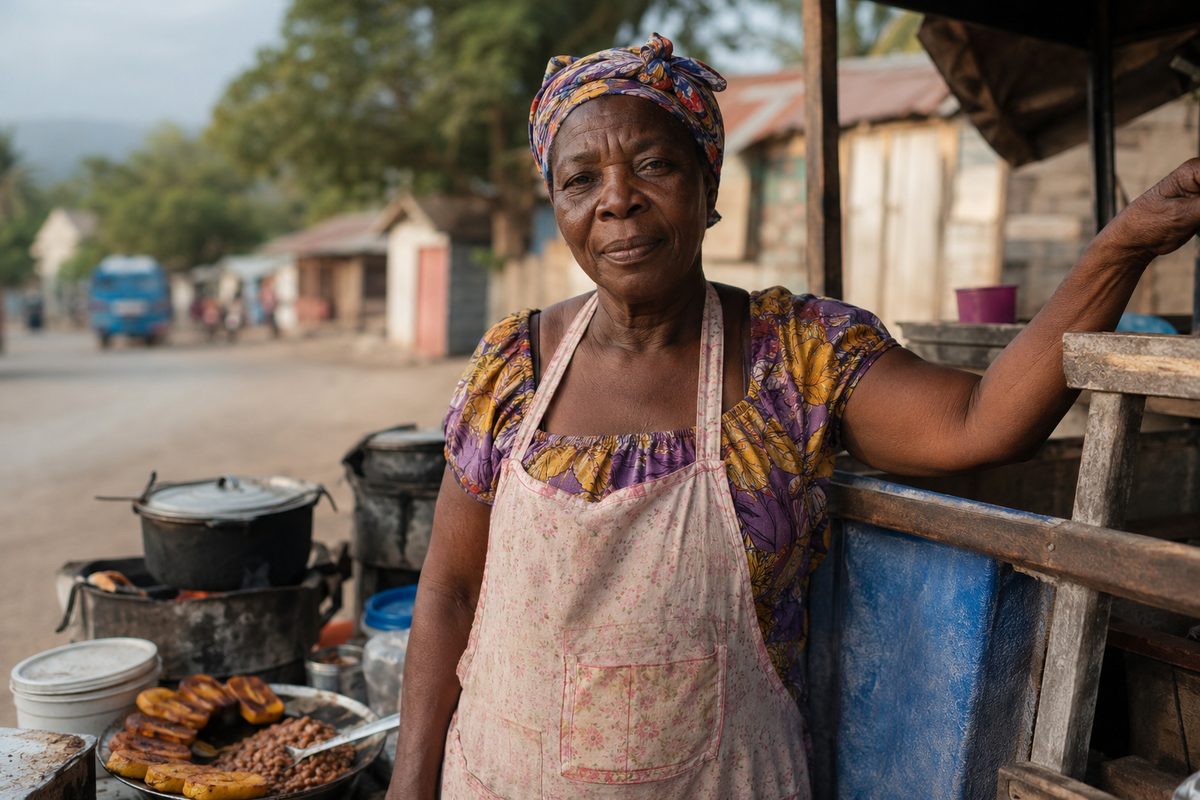
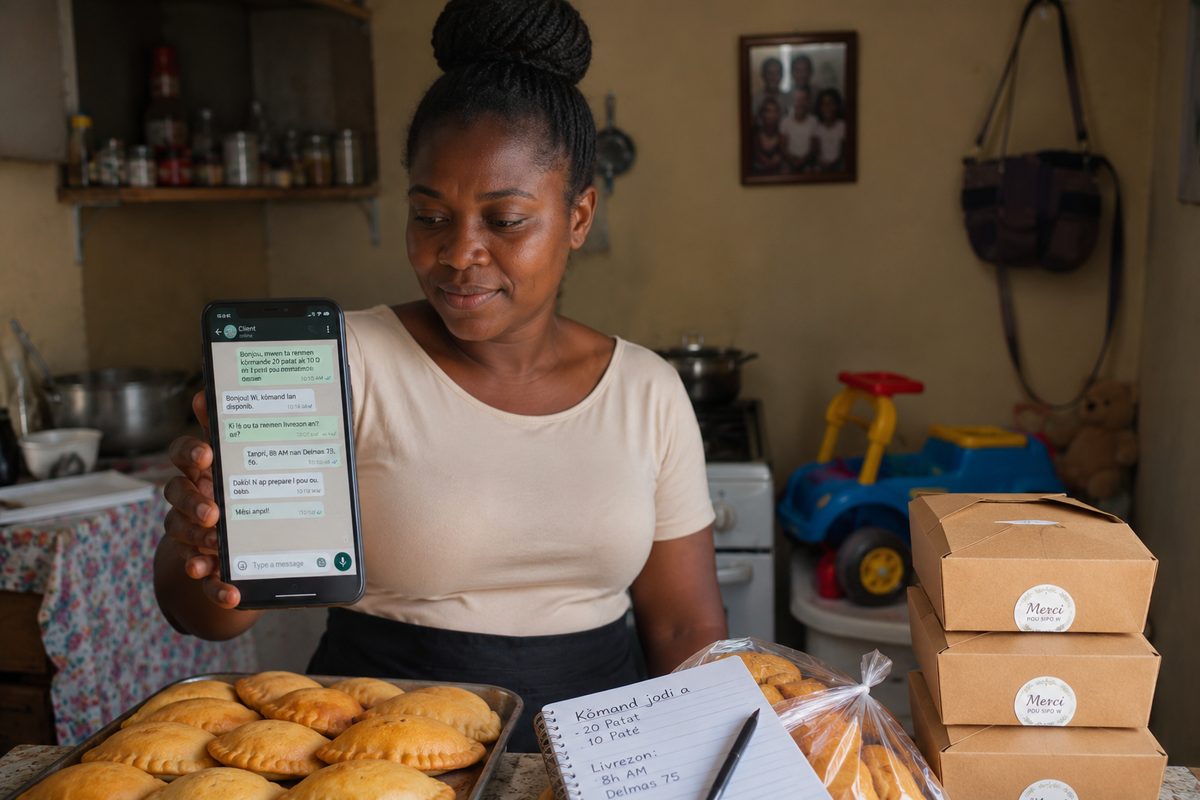
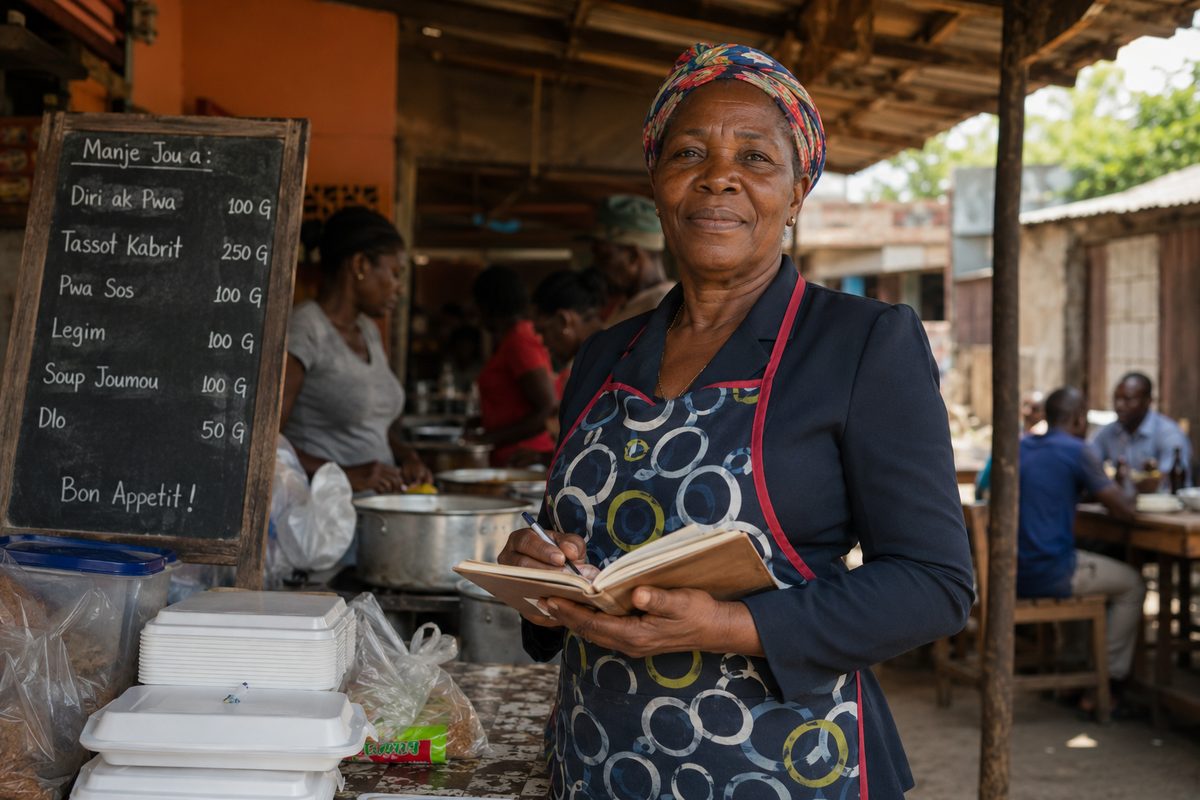
As a volunteer instructional designer for the Konbit Saradi / RADIKAL micro-franchise programme, I helped design training materials for street-food vendors across Haiti’s Southern Peninsula — learners who are mostly women, often the sole earner for a large family, working 10–13 hour days with low formal literacy and almost no time to train. The design problem: how do you teach a business skill to someone who cannot stop to read, and may not read at all?
Konbit Saradi — Learning Materials for Haitian Street-Food Vendors
My work focused on grounding the training in the real lives of the vendors and translating that into materials they could actually use. It ran across three connected pieces:
-
Context & learner research: I reviewed how health education, international development, and adult-literacy campaigns reach low-literacy audiences — IKEA’s wordless assembly guides, WHO/UNICEF behaviour-change posters, audio “sound books” that need no internet. The recurring pattern was clear: show actions, not information; pictures and demonstration before text; one idea at a time.
-
Learner personas from vendor interviews: I helped build composite personas anchored to verbatim interview quotes — the subsistence roadside cook, the WhatsApp order-based seller, the established saver-investor — so every design decision could be tested against a real person: “would this work for Manmi Costa?”
-
Desired behaviours by training area: I mapped specific, observable, measurable behaviours (not attitudes) across food hygiene, financial literacy, digital-payment adoption, and the everyday “maths of the business” — each one traceable back to the interviews, with inferred items flagged for the field team to validate.
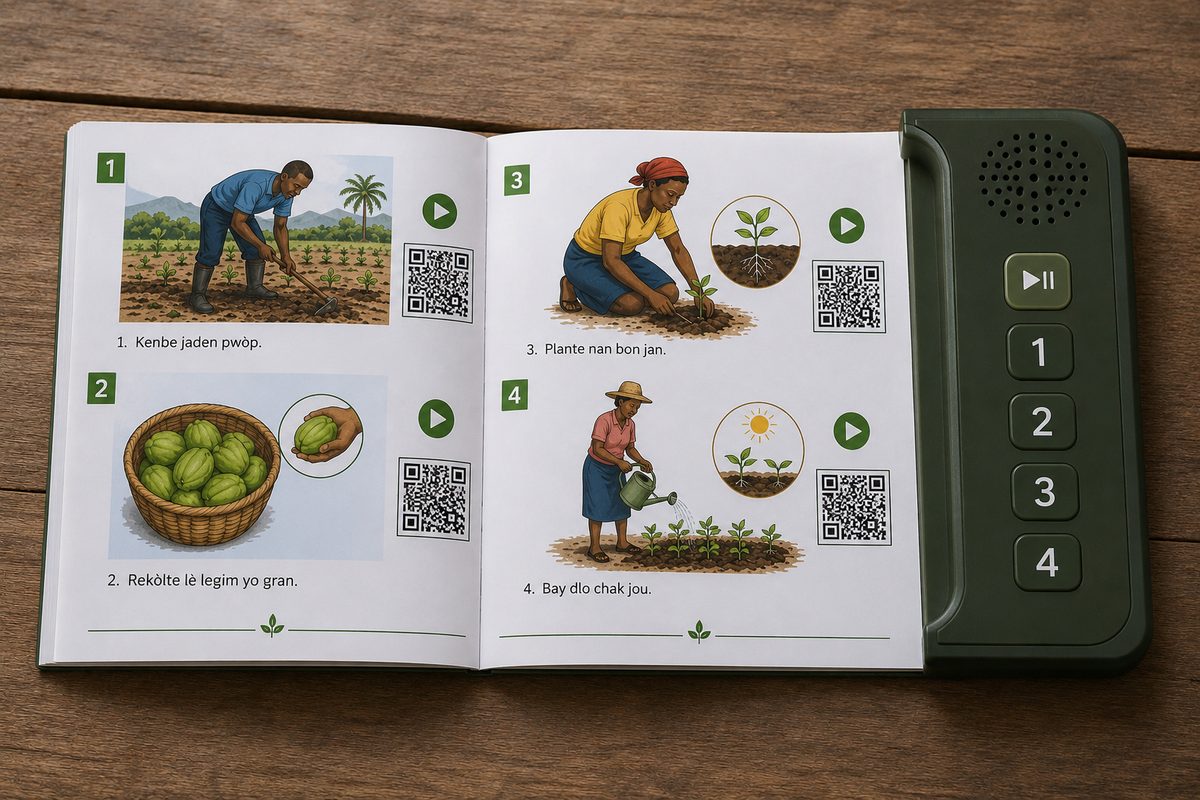
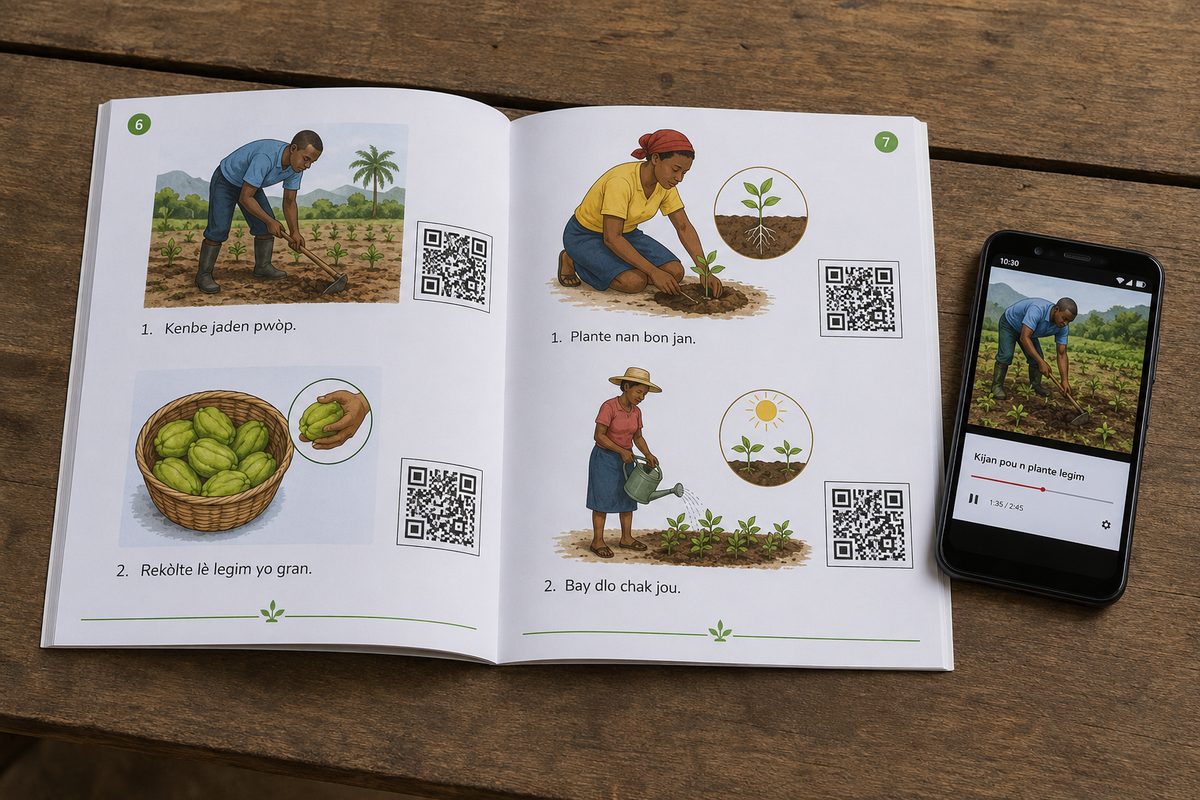
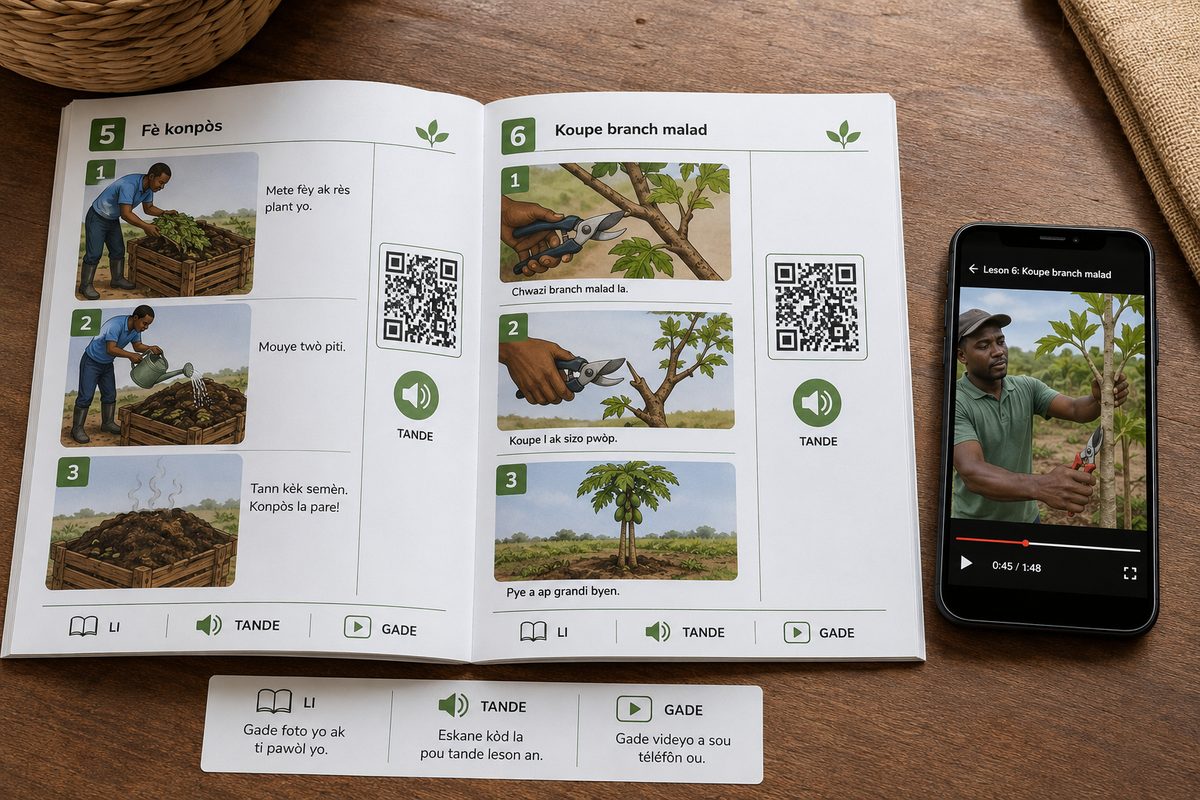
That research pointed to one product concept: an IKEA-style illustrated booklet with QR codes linking to short audio and video — minimal text in Haitian Creole, every step shown as a picture, and a “listen / watch” path for vendors who don’t read. It pairs with a simple offline sound-book device so the materials work without a reliable internet connection.
The personas behind the design — the vendors these materials are built for: